
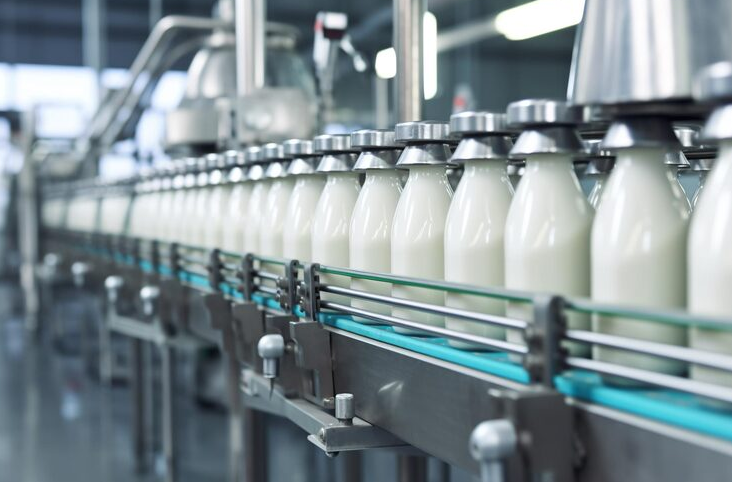
Milk is the primary dairy product we consume daily. Milk contains a high amount of calcium and other minerals that benefit overall human health, especially bone health.
In our daily lives, we consume yogurt, butter, ghee, cheese, whey, and even milk powder. These dairy products are rich in taste, and most of the food is incomplete without them. To achieve these products, milk is used. Here, we will discuss how milk can be converted into various dairy products.
Preparation of Milk
On dairy farms, a dairy processor is used to safely convert milk into various products. The milk is spun at high speed to remove dirt and other impurities. After clarification, the separation of cream from milk is done. In this process, the cream and milk combine again at the end, adjusting to a perfect ratio for the required fat.
Homogenization is also an important step in which the milk passes through a high-pressure nozzle. It helps the globules shatter, and a thick layer of cream doesn’t form on the surface of the milk when packed and delivered.
Heat Treatment
Raw milk has a shorter shelf life and can easily spoil, so thermal treatment is applied to extend its shelf life. It’s done in two ways: pasteurization and UHT.
In pasteurization, milk is heated to 75°C for 15 seconds, which kills all pathogens in the milk while preserving its nutritional value.
In UHT (Ultra-High Temperature), milk is heated to an extremely high temperature up upto 150°C for a few seconds. This process helps milk last longer without putting it in the refrigerator.
Milk Fermentation
Milk fermentation is done in various ways, which convert the milk into different liquid dairy products. Milk contains lactose, which can be fermented to produce lactic acid. This fermentation thickened the milk into yogurt by coagulating its protein.
During the preparation of butter, the water left behind is called buttermilk, which is another liquid dairy product. A specific bacterial culture is added to milk to skim it.
Preparation of Semi-Solid Products
Semi-solid products like cheese and butter are also cultivated from milk. Cheese is a classic ingredient that needs patience to be prepared. Enzymes or bacterial cultures are added to milk and make the protein coagulate into solid curd.
After that, the cured milk is pressed, salted, and stored for a longer period to develop its flavor. The cured milk also continues churning, which causes the fat to separate and bind together, forming butter, and the liquid left behind is buttermilk.
Conversion into Milk Powder
Milk is added into a vacuum evaporator at reduced pressure, which causes almost 90% of the water to evaporate. The milk becomes thick and creamy at this stage. Then, the concentrated milk is passed through a drying chamber filled with hot air.
The milk in this chamber is pushed at high speed through an atomizer or nozzle, which converts it into billions of tiny droplets that meet hot air at around 200°C. The moisture evaporated instantly when the drop was exposed to this much heat, leaving behind the powder.